The AI model race is not over, but it is no longer the only race that matters.
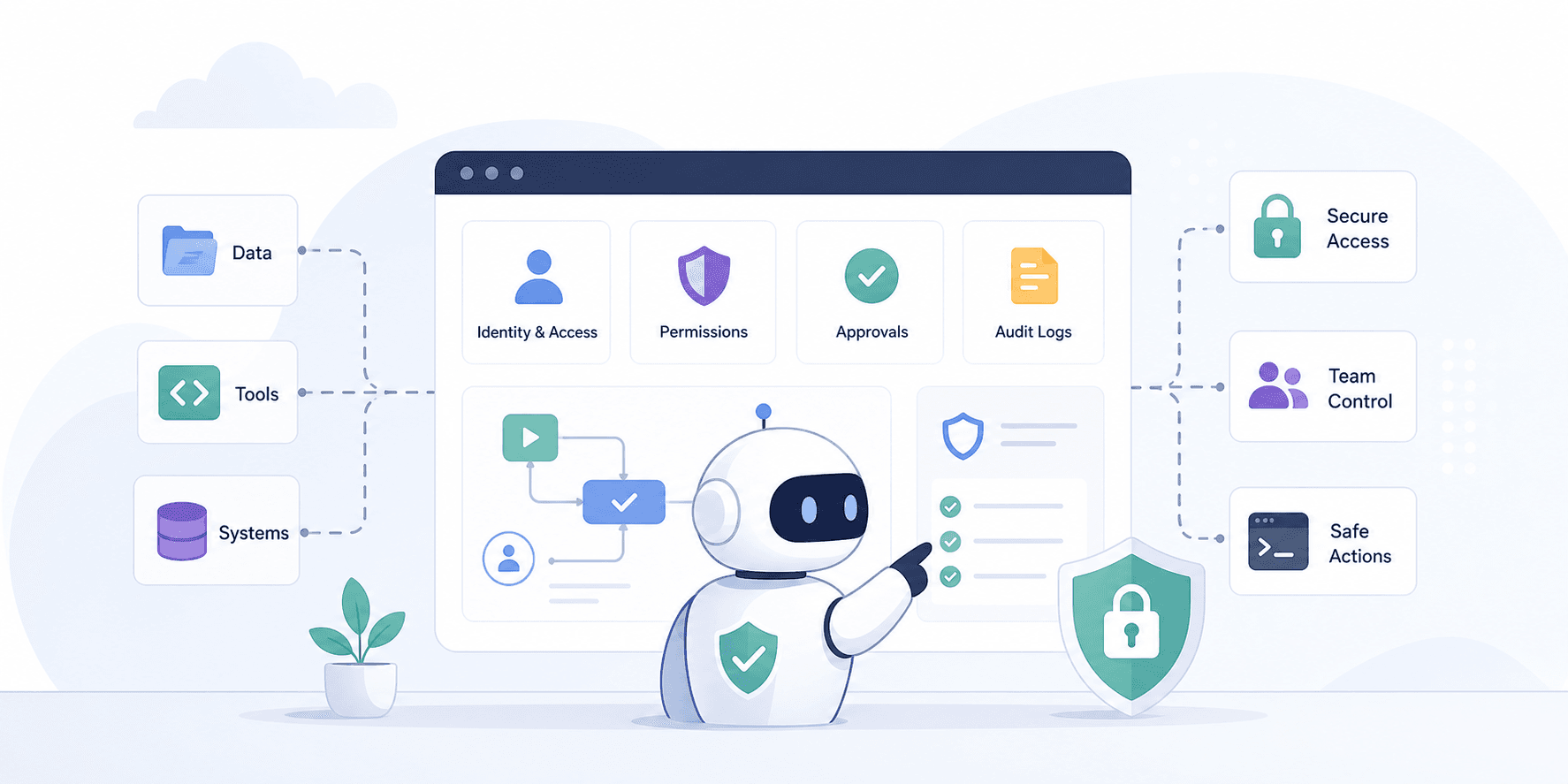
For enterprise buyers, the bigger question is now more practical: who controls the agent, what can it access, and how do you keep it safe when it starts acting on its own? That is why the current battle in enterprise AI looks less like a model benchmark contest and more like a control plane fight.
What changed
For the last two years, most AI conversations were about raw capability. Better reasoning, longer context, faster output, and lower cost all mattered, and they still do. But the market is now treating models as one layer in a much larger stack.
Reuters reported in April that Google was putting AI agents at the center of its enterprise push, alongside new governance and security features. Microsoft followed with Agent 365, which is built as a control layer for observing, governing, and securing agents across Microsoft and third-party ecosystems. OpenAI then brought Managed Agents to AWS Bedrock and framed the product around production use, orchestration, and governance.
The signal is clear. Enterprises do not just want a smarter model. They want a system that can deploy agents without losing control.
Why this matters
An agent is useful only if it can take action. That is also what makes it risky. Once an agent can read data, call tools, or change systems, the old chat-box mental model stops working.
The important questions become simple but hard to answer. Which identity does the agent use? What permissions does it inherit? Which actions require approval? What gets logged? How do you revoke access fast? What happens when the agent makes a bad decision?
Without answers to those questions, you do not have enterprise AI. You have a fast way to create incidents. That is why control planes are becoming the real product. They bring together identity, permissions, workflow orchestration, observability, policy, and auditability, and they turn a powerful model into something a company can actually trust.
What the market is showing
The same concern is showing up from different directions. Google is pushing agents as part of its enterprise strategy. Microsoft is selling a single control layer so teams can govern agents without spreading them across disconnected tools. OpenAI is also moving toward production use with governance in mind.
That matters because it shows the same buyer worry everywhere. Teams are not only asking which model is best. They are asking which platform can run agents safely at scale. Even Anthropic's enterprise momentum points in the same direction. The story is no longer just about model quality. It is about the platform around the model.
This is a useful shift for buyers. It means teams can stop asking, "Which model is strongest?" and start asking, "Which platform gives us the right guardrails?"
What a real control plane needs
If you are building or buying agent infrastructure, the minimum list is not small. A real control plane needs:
- Identity and access control
- Role-based permissions
- Explicit approval steps for risky actions
- Secret handling that keeps raw keys away from the model
- Audit logs that show what happened and why
- Sandboxing for tools and integrations
- Policy controls for different teams and departments
- Recovery paths when something goes wrong
That is the difference between a demo and a system a team can rely on every day. It is also why a shared agent product needs more than a prompt box. TeamCopilot exists in this gap: a place where teams can use AI agents with permissions, approvals, secret management, and workflow control instead of giving every agent blanket access.
Why this matters for teams
Most teams do not need a million-agent platform. They need a safer way to let a few people and a few workflows use AI without creating chaos. In practice, that means:
- letting one team use an agent for research while another uses it for code review
- limiting sensitive actions to approved workflows
- keeping secrets out of the model's hands
- making it obvious who can do what
If that sounds boring, it should. Infrastructure that keeps working is usually boring. The recent wave of AI incidents makes the point even clearer. When agents can touch real systems, mistakes stop being theoretical. A bad permission, a leaked token, or an ungoverned connector can turn into a real business problem quickly.
For a related example, see Why Your AI Agent Should Never See Your API Keys and An AI Coding Agent Deleted a Production Database. Here's What Happened and How to Prevent It.
The new buying criteria
If you are evaluating enterprise AI in 2026, the model itself is only part of the answer. You also need to know:
- Can we control the agent after it is deployed?
- Can we prove what it did?
- Can we stop it from doing too much?
- Can different teams use it safely without stepping on each other?
That is the control plane question, and it is quickly becoming the real enterprise decision.
For a broader market view, Best AI Agent Platforms for Teams in 2026: Comparing 13 Tools is a useful starting point.
FAQ
What is an AI agent control plane?
It is the layer that manages identity, permissions, policies, tools, logging, and governance for AI agents.
Why is the control plane more important than the model?
Because enterprises care less about a model scoring a few points higher and more about whether they can safely deploy it across real systems.
What is the biggest risk with agents in production?
Unrestricted access. If an agent can read, write, or trigger actions without guardrails, a small mistake can become a serious incident.
How does TeamCopilot fit into this shift?
TeamCopilot helps teams run AI agents with permissions, approvals, secret handling, and workflow controls, which is exactly the kind of control layer enterprises are starting to demand.
Support the project
If this was useful, star TeamCopilot on GitHub.
TeamCopilot is a shared AI agent for teams with centralized context, permissions, and workflows.