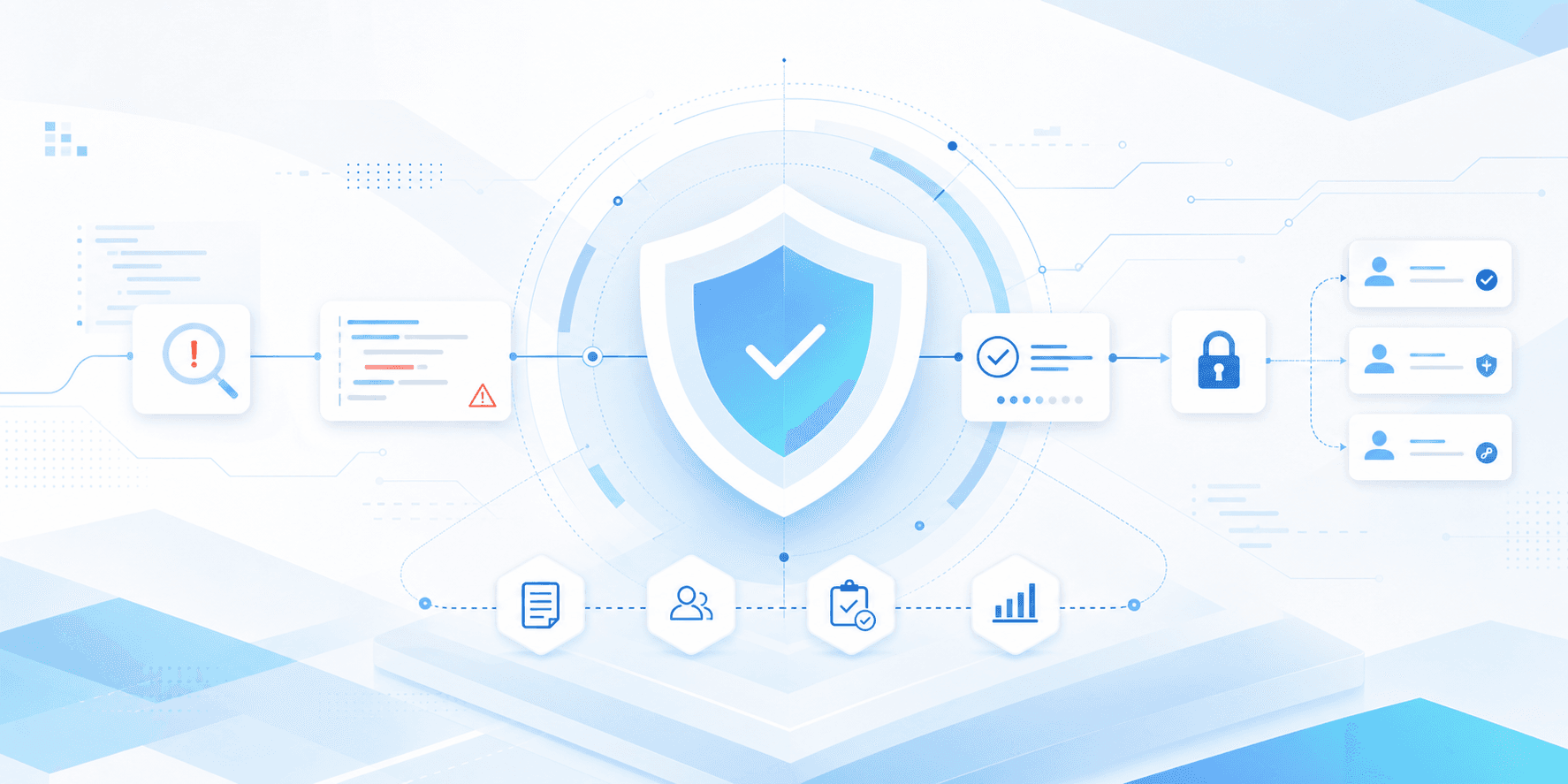
OpenAI's Daybreak is a useful signal because it shows where AI security is actually going. This is no longer just about chatbots helping a security team write cleaner summaries. Daybreak is a push into vulnerability detection, patch validation, threat modeling, and controlled access for defensive workflows, meant to sit inside real software and security operations, not beside them. That matters because the industry has already moved past the question of whether AI can help find bugs. The harder questions are now about access, reach, and how the work flows back into a team without creating a new mess.
What OpenAI launched
OpenAI announced Daybreak on May 12, 2026 as a cybersecurity initiative that combines its models with Codex Security. The company framed it as a way to help organizations identify and patch vulnerabilities before attackers find them, and the structure is the interesting part.
Daybreak is not a single model. It is a tiered system:
- GPT-5.5 for general enterprise use
- GPT-5.5 with Trusted Access for Cyber for verified defensive work
- GPT-5.5-Cyber for authorized red teaming, penetration testing, and controlled validation
That tiering is the real story. OpenAI is treating cyber work as something that needs different levels of trust, not one flat interface for everyone.
The platform also uses Codex Security to create an editable threat model for a repository, focus on realistic attack paths, test likely issues in isolation, and propose fixes. In other words, it is trying to move from "find the bug" to helping close the loop.
Why this launch matters
Security teams already know that finding flaws is not the hard part anymore. The hard part is everything after the alert.
There is triage. There is validation. There is deciding whether the finding is real. There is patching. There is checking whether the fix broke something else. Then there is proving to the rest of the business that the issue is actually handled.
Daybreak points straight at that bottleneck.
That is why it feels different from a generic AI security feature. It is not trying to be a quick assistant that drafts a report and disappears. It is trying to sit in the middle of the workflow and keep going until the work is done.
That also makes it a better comparison to Anthropic's Mythos than to a simple code helper. The market is converging on the same idea: frontier models are becoming security tools, and security tools are becoming governed systems.
The bigger shift underneath it
The Daybreak announcement is another sign that enterprises are buying control, not just capability.
If a model can inspect code, reason about attack paths, and suggest fixes, then access control suddenly matters a lot. You do not want every user, every team, or every workflow to have the same permissions. You do not want raw secrets floating into model context. You do not want destructive actions triggered by a casual prompt.
That is the same lesson behind AI Agent Governance Is the New Enterprise Control Plane and Why Your AI Agent Should Never See Your API Keys.
The pattern keeps repeating. Once AI touches real systems, the product question becomes operational:
- who can run it
- what it can reach
- what needs approval
- what gets logged
- how you revoke access when something looks wrong
That is not a nice-to-have layer. It is part of the product.
Why the security angle matters even more now
There is a second reason Daybreak is worth paying attention to. AI is compressing the time between bug discovery and bug exploitation, and that changes the economics of defense. If the attacker can find issues faster, defenders need faster validation, faster patching, and better control over who can do what inside the security workflow.
This is not theoretical. We've already seen what happens when AI agents or coding tools get too much reach. An AI Coding Agent Deleted a Production Database. Here's What Happened and How to Prevent It showed how a normal-looking development session can become a production incident when secrets and permissions are too broad.
The same logic applies here, only in a more sensitive part of the stack. A security agent that can inspect repositories and suggest fixes still needs guardrails. A powerful security model does not remove the need for approvals. It increases it.
What teams should do now
If you are a security or platform team, the right reaction is not to panic. It is to get your house in order.
Start with the basics:
- keep privileged credentials out of agent-readable context
- separate read-only analysis from write actions
- require approval for any change that can affect production or customer data
- log every important tool call and permission grant
- scope access by team, project, and task
- make rollback part of the workflow, not an afterthought
That is also why a shared agent layer like TeamCopilot matters. The value is not just that teams can run AI. It is that they can run it with approvals, permissions, workflows, and secret management already built in. A security workflow should not depend on everyone remembering the rules every time.
If you want a broader market view of how these products are stacking up, Best AI Agent Platforms for Teams in 2026: Comparing 13 Tools is a good companion read.
What this means for the market
OpenAI's Daybreak does two things at once. First, it makes AI security feel more real to the enterprise buyer, which matters because most teams are already under pressure to do more with less in security. Second, it confirms that model vendors are competing on the surrounding system, not just the model itself. The controls, the access model, the workflow, the audit trail, and the deployment path are all part of the product now.
That is a healthy shift. It gives buyers something concrete to compare, and it makes the risks easier to see.
For teams that have been thinking about secret exposure, the lesson is familiar. Protecting AI Agents with Honeytokens and Why Your AI Agent Should Never See Your API Keys both point to the same idea: if the model does not need the secret, do not give it the secret.
Daybreak is really the same conversation, just at a higher level.
FAQ
What is OpenAI Daybreak?
Daybreak is OpenAI's cybersecurity initiative for vulnerability detection, patch validation, threat modeling, and related defensive workflows.
Is Daybreak just a model?
No. It is a platform and workflow story. OpenAI tied it to Codex Security, tiered model access, and security partner integrations.
What makes Daybreak different from a normal AI assistant?
It is built for defensive security work inside real repositories and validation loops, not just for chat or code suggestions.
Why does the access model matter so much?
Because security work is sensitive. Different tasks need different permissions, and the highest-capability workflows should not be open to everyone.
Does Daybreak replace security engineers?
No. It can speed up analysis and patch validation, but teams still need people to decide priorities, review changes, and own the outcome.
What is the main risk with AI-powered security tools?
Overreach. If the tool can touch too much, or if secrets and approvals are loose, the defense system can become a new attack path.
How does this connect to TeamCopilot?
TeamCopilot is built for the same operational problem: letting teams use AI with permissions, approvals, secret handling, and reusable workflows instead of giving every agent broad access.
Should every team adopt tools like Daybreak right away?
Not blindly. Start with narrow, well-scoped use cases, then expand only after you have logging, approvals, and clear ownership in place.
What should smaller teams do if they do not have a security platform team?
Use the same principles. Limit access, keep secrets out of model context, separate analysis from destructive actions, and make the workflow easy to audit.
Support the project
If this was useful, star TeamCopilot on GitHub.
TeamCopilot is a shared AI agent for teams with centralized context, permissions, and workflows.